

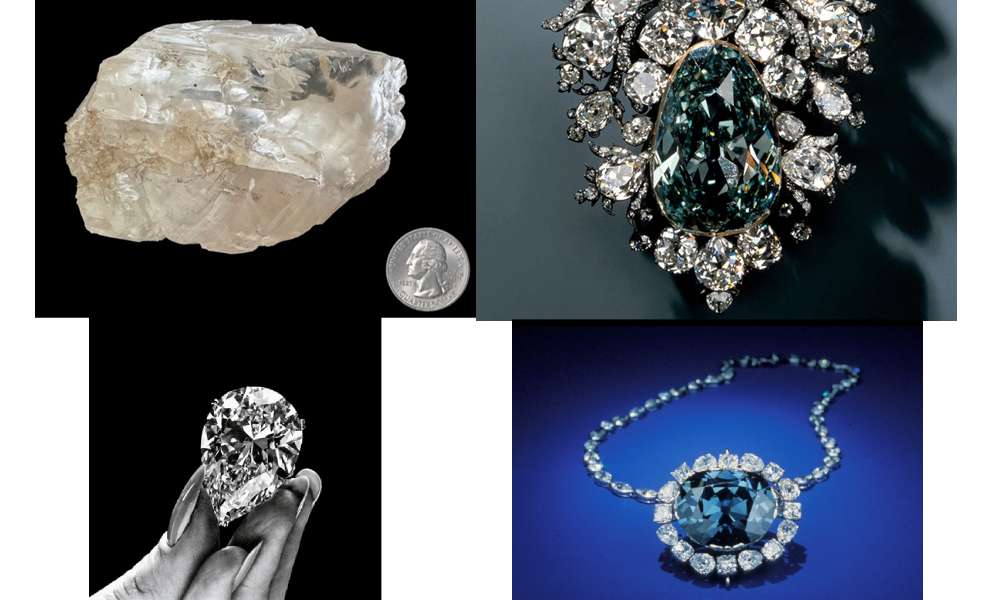
The Gemological Institute of America celebrated World Diamond Day on 8th April by showcasing a curated selection of historically significant diamonds it has studied, emphasizing their rarity, scientific value, and cultural heritage.
Among the standout gems featured were the Hope Diamond, Dresden Green, Winston Red, Taylor-Burton Diamond, and the recently examined Motswedi Diamond.
The 45.52-carat Hope Diamond, famed for its Fancy Deep greyish-blue hue, is one of the most well-known coloured diamonds, with origins in India and a storied journey before being housed at the Smithsonian Institution. The Dresden Green, weighing around 41 carats, is the largest known natural green diamond, while the 2.33-carat Winston Red ranks among the rarest red diamonds and is the only Fancy red diamond on public display.
GIA’s recent study of the 2,488.32-carat Motswedi diamond, unearthed in Botswana in 2024, attracted global attention. Identified as a high-purity Type IIa rough diamond, it is the second-largest gem-quality diamond ever discovered and offers valuable insights into the extreme conditions under which diamonds form deep within the Earth.
According to Pritesh Patel, GIA has been instrumental in advancing gemmological science for nearly a century, establishing globally trusted standards such as the 4Cs of diamond quality and the International Diamond Grading System, while continuing to lead through research, transparency, and innovation.
In addition, GIA has examined notable historical and royal pieces, including the Marie-Thérèse Pink and the Mughal Spectacles, further documenting their origins and characteristics.