

De Beers presents A Diamond Is Forever: The Making of a Cultural Icon 1926–2026.
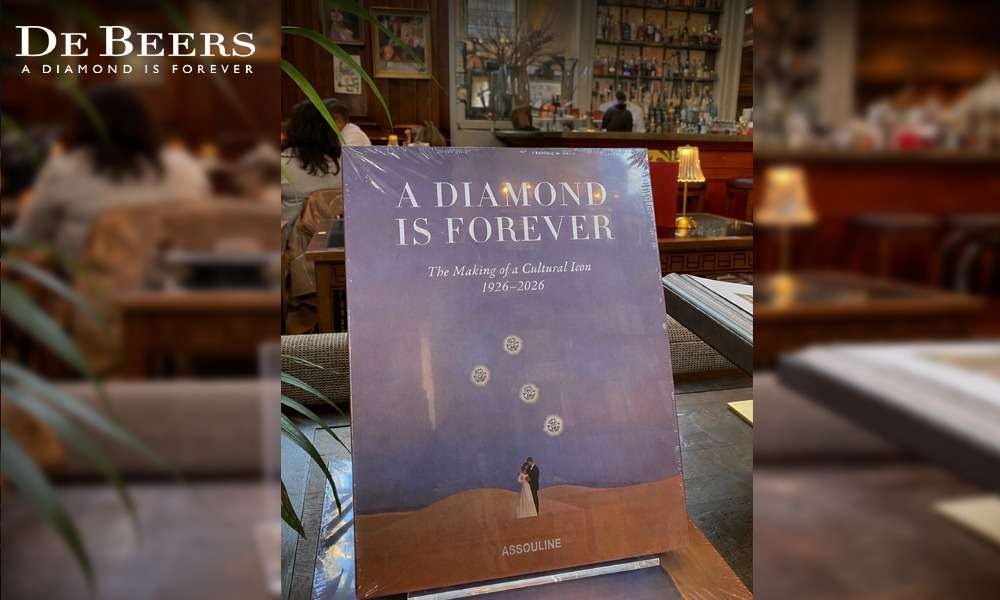
De Beers Group, a global leader in natural diamonds with over a century of heritage, is set to launch A Diamond Is Forever: The Making of a Cultural Icon 1926–2026—a visual retrospective that celebrates its transformative influence on the diamond industry. The book explores how, starting in the 1930s, the brand reshaped diamonds from exclusive luxuries for the elite into powerful symbols of love, commitment, and personal success, establishing them as timeless creations of nature and craftsmanship.
Drawing from rare archival material, the publication highlights how De Beers introduced the magic of diamonds to a broader audience, redefining luxury marketing from the era of the Great Depression to today’s conscious luxury landscape. A defining moment featured in the book dates back to 1947, when copywriter Frances Gerety of N. W. Ayer coined the iconic phrase “A Diamond Is Forever,” a line that forever transformed the industry and was later recognised by Advertising Age in 1999 as the greatest advertising slogan of the twentieth century.
Beyond its visual appeal, the book delves into how these campaigns influenced social customs and behaviours. From popularising engagement rings in the late 1930s to introducing concepts like the “Two Months’ Salary” rule and the “Right Hand Ring,” De Beers redefined traditions while reflecting changing notions of independence, particularly for women. In markets like India, such narratives played a pivotal role in shifting consumer preferences—from gold-dominated purchases to diamonds as emotionally meaningful expressions of love, success, and milestones.
The narrative also showcases how De Beers merged the ancient rarity of diamonds with art and pop culture. Creative collaborations with artists like Pablo Picasso, Salvador Dalí, and Raoul Dufy elevated their artistic appeal, while icons such as Marilyn Monroe and Elizabeth Taylor defined their glamour. Later campaigns, including the 1990s “Shadows” series set to Palladio by Karl Jenkins, reinforced the timeless and distinctive identity of diamonds.
In recent years, the conversation has expanded to include provenance, sustainability, and ethical sourcing—positioning natural diamonds not only as enduring symbols of love but also of responsibility and conscious luxury. Much like a curated gallery of cultural evolution, A Diamond Is Forever offers a rare glimpse into one of the most influential brand narratives ever created, revealing how diamonds have continuously mirrored society’s changing values and aspirations.